Fihone
A mobile security platform designed to protect devices through secure authentication, activity monitoring, and intelligent device management.
- Flutter
- Dart
- Backend API
- Authentication
- Location services
Overview
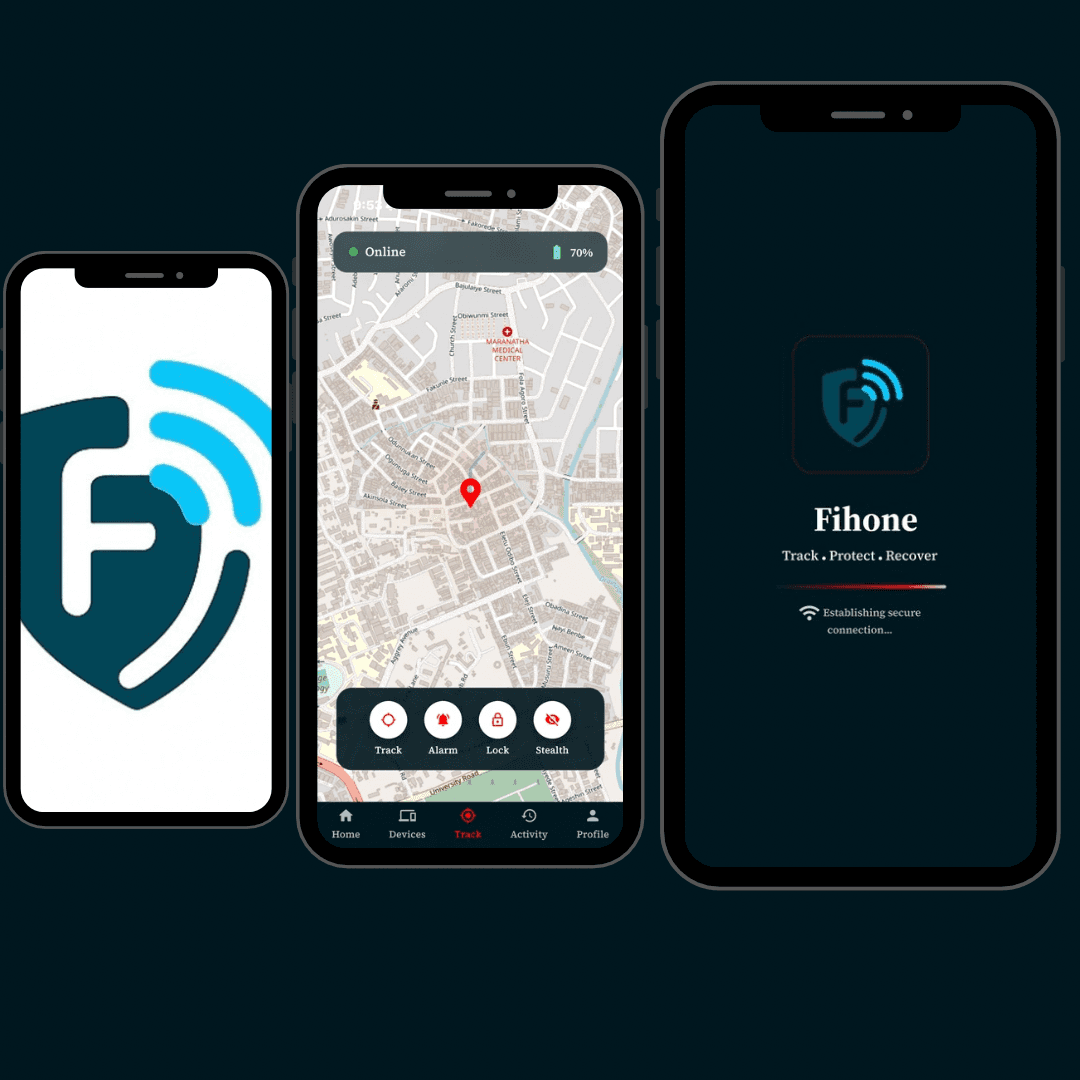
Fihone is a cross-platform mobile application built to give people more visibility and control over the security of their own devices. The idea is a single app where someone can review device activity, manage security controls, and respond quickly if something looks wrong — rather than piecing that together across several disconnected tools.
The mobile client is built in Flutter, backed by an API that handles authentication, device data, and location services. It's under active development, and the architecture is still evolving as the core flows get built out and tested.
What I built
- Device monitoring and security controls
- Device registration and tracking
- Activity monitoring
- User authentication
The problem
Most people have no easy way to see what's actually happening on their devices, or to act quickly if a device is lost, misused, or behaving unexpectedly. That kind of visibility tends to be scattered across manufacturer apps, carrier tools, or nothing at all.
Fihone is my attempt at pulling that into one place — a mobile app that treats device security as something you can actually check in on, not just something you hope is fine.
Engineering
The app is split cleanly between the Flutter client and a separate backend API, so the mobile app isn't doing anything it shouldn't — authentication, device data, and location handling all live behind the API rather than in the client.
Authentication is the foundation everything else depends on, so it was one of the first things built and the part I've spent the most time getting right. From there, device registration ties a physical device to an account, and activity monitoring builds on top of that to surface what's actually going on.
State management on the client is built around keeping device and account data in sync with the backend without over-fetching, which becomes more important as more monitoring features get added.
Challenges
Location and device permissions behave differently across Android and iOS, and getting a consistent, trustworthy signal out of both without draining the battery or annoying the user has taken more iteration than I expected.
Keeping the mobile client and backend in agreement about device state — especially when a device goes offline or a user has multiple devices — has been the other recurring problem worth solving properly rather than patching around.
Decisions
I chose Flutter early on so the same codebase could reasonably target both Android and iOS without maintaining two separate clients while the product is still taking shape.
I also decided to build the backend as a proper separate API from day one, rather than embedding logic into the client, even though that meant more upfront setup. It keeps security-sensitive logic off the device and makes it possible to add an admin or web layer later without rebuilding the mobile app.
Current status
Fihone is still in active development. Core authentication, device registration, and activity monitoring are being built and tested incrementally rather than all at once, and the app isn't publicly released yet.